
Université de Lille – CNRS UMR 9017 – Inserm U1019 – Institut Pasteur de Lille – CHU de Lille
The research conducted by the RMB team is a continuum from ceaseless acquisition of basic knowledge to the development of clinical applications and investigations. The primary focus of the team is to deepen our understanding of the pathogenesis of two respiratory infectious bacteria: Bordetella pertussis, the causative agent of whooping-cough, and Mycobacterium tuberculosis, responsible for tuberculosis. The acquired knowledge is used to develop innovative tools for combating these diseases, which pose significant public health challenge. With tuberculosis claiming approximately 1.6 million lives annually and its multidrug-resistant strains posing a global threat, and pertussis experiencing resurgence even in countries with high vaccination rates, we believe that this research is of major importance.
Our team’s research is founded on three interconnected core pillars:
- Molecular Mechanisms of Bacterial Pathogenicity
- Genomics & transcriptomics to decipher patho-adaptation and virulence regulation
- Translational Research for New Vaccines, Diagnostics, and Treatments
These three pillars have been meticulously crafted based on our extensive expertise and experience with M. tuberculosis and bordetella. They guide not only our present projects but also lay the groundwork for our future objectives. Our research initiatives aim to address crucial questions related to critical patho-adaptive mechanisms of these pathogens, comprising emergence, nasal carriage, dormancy, resistance, persistence, tolerance, and resilience to various stresses, including immune responses and antibiotic exposure. By leveraging multidisciplinary and systems approaches, our research program is dedicated to unraveling the evolutionary dynamics, gene regulation networks, and immunomodulation associated with these phenomena. This knowledge is pivotal in the ongoing battle against respiratory diseases. Building on this foundation, we are committed to developing nasal vaccines, precision diagnostics, and targeted therapies to tackle these diseases effectively. Moreover, we aim to exploit singular features of some our developed tools for new “reverse translation”-based biological discovery. These endeavors are the heart of our research, driving us to make impactful contributions to the field of respiratory pathogen research.
Projets
Project leader:
Françoise Jacob-Dubuisson
Copper homeostasis in Bordetella pertussis
Copper is an essential micronutrient for most bacteria, serving notably as a co-factor of various enzymes and in electron transfer complexes, but it is also toxic and used as a killing agent by phagocytes. We have discovered that unlike other Gram-negative bacteria, the host-restricted pathogen Bordetella pertussis has few defenses against copper other than a custom-made system that fends off both metal and oxidative stresses. Conversely, this bacterium has acquired an original two-protein copper acquisition system that we are investigating, composed of a TonB-dependent transporter of a new subfamily and a heme-containing inner membrane protein. We have revealed a sophisticated mode of regulation of this system by copper involving a novel upstream Open Reading Frame (‘uORF’). Our results indicate that this system is involved in the provision of copper to the respiratory heme-copper oxidases. We are currently addressing the structure of the two proteins and their functions in B. pertussis.
We have also identified a new family of ribosomally produced, post-translationally modified peptides (‘RiPPs’) that we have called ‘bufferins’, in B. pertussis and other pathogenic and environmental bacteria. We have shown that model bufferins contribute to the protection against copper by chelating Cu(I) and Cu(II) ions. In the ANR CuRiPP grant we have discovered that conserved cysteines of bufferins are modified into thiooxazole by enzymes of the superfamily of multi-nuclear non-heme, iron-dependent oxidases (MNIO). In silico analyses have shown that bufferins represent a widespread family of MNIO-modified RiPPs. Our goals are to decipher the mechanisms of bufferin biogenesis, their structure and their mode of copper chelation.
Project leaders:
Carine Rouanet
Nathalie Mielcarek
Intracellular fate of respiratory pathogens within alveolar macrophages
Mycobacteria are predominantly intracellular pathogens and develop mechanisms to prevent intracellular degradation and to survive inside infected cells. Bordetella pertussis on the other side is a transient intracellular pathogen, the majority of which are killed by host cells within a couple of days.
We recently became interested in studying molecular and cellular mechanisms involved in the degradation and/or survival of these two pathogens inside alveolar macrophages. Once the respiratory pathogens are inhaled, they will encounter phagocytic cells which represent a first line of defense against the infection. Among them, alveolar macrophages play a key role in protection. Xenophagy represents a highly conserved defense mechanism of eukaryotic cells involved in the clearance of invading pathogens. During this complex process, intracellular micro-organisms are targeted to the degradative lysosomal compartment. A non-canonical autophagic pathway through LC3-associated phagocytosis (LAP) also contributes to immune regulation and inflammatory responses.
A knowledge gap exists on the involvement of autophagy and/or LAP in the intracellular clearance of B. pertussis and its impact on innate immune responses. On the other hand, while the mechanisms leading to intracellular survival of M. tuberculosis are extensively studied, little is known on the intracellular fate of ancestral mycobacteria and the evolutionary mechanisms leading to intracellular persistence.
We established a novel partnership with Dr. Ghaffar Muharram (MCPI team, CIIL) to tackle this question.
Project leader:
Romain Veyron-Churlet
Implication of protein-protein interactions in mycobacterial pathogenesis
Deciphering protein-protein interactions (PPIs) in pathogenic bacteria can help to understand cell physiology and elucidate host-pathogen interactions in which proteins play a crucial role. In addition, the study of PPIs can facilitate the discovery of protein function(s) through the ‘guilty by association’ principle.
As PPIs are key factors in the physiology and virulence of Mycobacterium tuberculosis, we are particularly interested in dissecting the PPI network in mycobacteria. For example, mycolic acid biosynthesis, which is the target of several anti-tuberculosis drugs, relies on specialised and interconnected protein complexes. Therefore, the identification and characterisation of PPIs may be an attractive approach for the development of new drugs and/or peptidomimetics capable of destabilising the formation of such complexes.
In addition, deciphering the PPI network of M. tuberculosis will identify interconnected pathways and critical steps required for mycobacterial infection, allowing a better understanding of TB pathogenesis.
Project leader:
Loic Coutte
The Bordetellae, which include the human pathogen B. pertussis and the veterinary pathogen B. bronchiseptica, produce a range of virulence factors, including adhesins and toxins. These enable the bacteria to transmit, infect and colonize the respiratory tract of the host. These bacteria are able to regulate the expression of their virulence factors according to the environmental conditions they are faced with. The regulation of Bordetella virulence is mediated by the two-component system BvgA/S. During the virulence phase, the phosphorylation of BvgA activates the transcription of virulence-activated genes (vags). In the a-virulent phase, the vags are not expressed, but instead, virulence-repressed genes (vrgs) are expressed. The expression of the vrgs is regulated by another two-component system, RisA/K, and by the action of BvgR, a c-di-GMP phosphodiesterase. Our objective is to utilise molecular biology and omics technologies to ascertain the regulatory network and the mode of regulation involving the BvgASR and the RisAK systems. Notably, our research has revealed that certain genes are subject to regulation by both BvgA and RisA. Furthermore, it has been demonstrated that a number of genes which have not been found to be regulated in omics studies contain a binding site for BvgA and/or RisA in their promoter regions. This adds to the complexity of the RisAK/BvgASR network in Bordetella virulence regulation. This has enabled us to redefine the dogma of virulence regulation in Bordetella. We have identified new partners for the BvgAS/RisAK systems, which are under investigation using several omics approaches, as well as analysing protein-protein interactions and performing targeted mutagenesis. We are also defining the regulatory functions of RisA, particularly with regard to phosphorylation and binding of the cofactor c-di-GMP. Furthermore, it has been determined that B. pertussis is capable of encoding up to 16 different two-component systems, which lends further credence to the assertion that Bordetella gene expression biology is of an extremely complex nature.
Project leader:
Philip Supply
Evolutionary history and factors driving the spread of tuberculosis
Mycobacterium tuberculosis is the deadliest bacterial infectious agent globally and the first contributor to antimicrobial mortality. Using comparative genomics and pathophysiological approaches applied to strain lineages with different epidemic and/or antibiotic resistance profiles, we aim at identifying the factors that have contributed to its emergence and its exceptional evolutionary success, including in multidrug-resistant (MDR) forms. This work has led to the discovery of exceptional ancestral branches of tubercle bacilli in East Africa, including a new sister clade of the M. tuberculosis complex (MTBC), as well as outstanding TB clinical isolates with a smooth colony morphotype, named M. canettii, showing mosaic genomes and inter-strain recombination in contrast to the highly clonal structure of the MTBC. The latter strains that are also less persistent during host infection than M. tuberculosis likely represent an extant reflection of the ancestral, free-living bacterial pool from which the MTBC emerged. With help of Cyril Gaudin (internal collaboration with ERA4TB team), whole genome sequencing (WGS) analysis of M. canettii mutants obtained after experimental evolution revealed that mechanisms conferring increased resistance to host-induced stress were key in the emergence of persistent TB strains. We also used WGS to reveal molecular and historical factors that favored the emergence and the longitudinal spread of major epidemic multi-drug resistant clones, member of the major Beijing/L2 lineage of the MTBC. The extensive resistance and the outstanding genetic arsenal of these geographically widespread MDR strains represent a “perfect storm” that jeopardizes the successful introduction of new anti-MDR-TB antibiotic regimens. With the CRyPTIC consortium, genetic determinants of drug resistance are further comprehensively catalogued across the genomes of globally circulating M. tuberculosis strains. The development and international deployment with GenoScreen of the innovative next generation sequencing-based diagnostics Deeplex Myc-TB, which has a uniquely extended diagnostic spectrum (see Translational Research), represents a new powerful tool to combat the spread of such highly resistant clones.
Project leader:
Philip SUPPLY
Deep sequencing for culture-free diagnosis of drug resistance in mycobacteria (Deeplex Myc-TB and Deeplex Myc-Lep)
Only 40% of the estimated ~400,000 new tuberculosis cases with rifampicin resistance or multidrug-resistance occurring each year are diagnosed and treated, reflecting major limitations of conventional phenotypic and molecular tests. By building on the progress of next-generation sequencing (NGS) technologies and the knowledge gained on the M. tuberculosis resistome, novel tools for rapid NGS-based, culture-free diagnostics are developed by GenoScreen (Lille) with our collaboration. This led to the development of the first commercial targeted NGS kit for prediction of susceptibility or resistance to 13 anti-tuberculosis drug classes, directly applicable on clinical samples, named Deeplex® Myc-TB. Based on results showing its high degree of accuracy, including in diagnostic trials conducted in Africa, Eastern Europe and Asia (DIAMA H2020 EDCTP; Seq&Treat UNITAID), this novel diagnostic has been endorsed by the WHO in 2023, and is used in >50 countries. We also used this assay to discover ancestral clades of tuberculosis bacilli in East Africa, supporting the East African origin of the pathogen (see Genomics and transcriptomics). We developed a similar first-of-its-kind NGS-based assay for culture-free diagnosis of the agent of leprosy, M. leprae, which is unculturable in vitro. We thereby performed the first nationwide NGS-based survey of leprosy drug resistance in the Comoros, revealing full susceptibility to anti-leprosy antibiotics of M. leprae strains in this country highly affected by this disease.
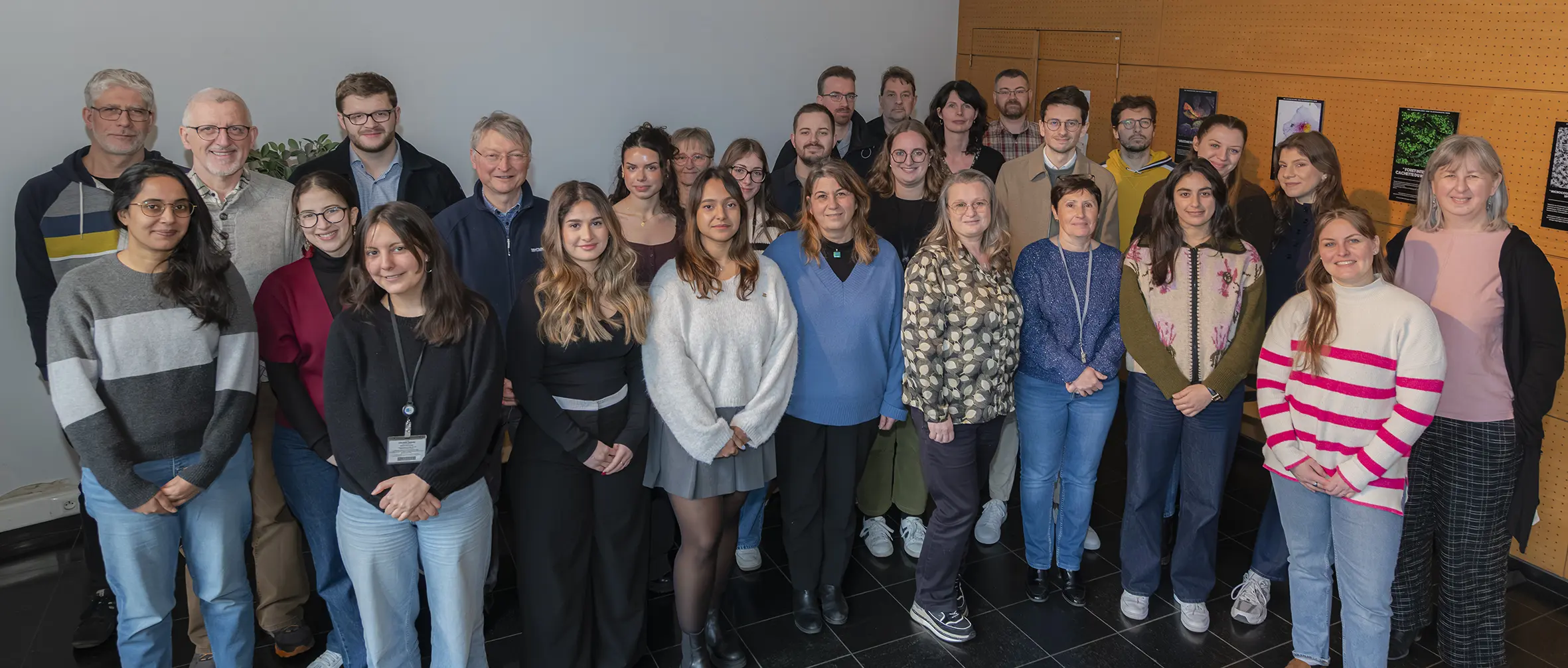
Membres
BENFIALA Sirine
M2 Student
CAMUS Guillaume
PhD Student
DEBRIE Anne-Sophie
IPL engineer (IE)
DENY Maud
Post-Doc
DEPLUQUE Marine
RestolTB engineer
EDOO Zainab
PostDoc
FINE Joan
PhD student
GRANDE Axelle
PhD student
GROSSE Camille
PostDoc
HACHMI Majda
PhD Student
HANNA Sarah
M2 student
LECHER Sophie
AR IPL
LEULEU Inès
PostDoc
OSMANI Dacine
PhD Student
SENCIO Valentin
PostDoc
SLUPEK Stéphanie
AR IPL
VANDEPUTTE Alexandre
Ulille engineer (IE)
VEYRON-CHURLET Romain
CNRS researcher (CRCN)
Mots-clés
Contact d'équipe
Publications
PLoS Pathog 19, e1011192
(2023) Tirap controls Mycobacterium tuberculosis phagosomal acidification
mSystems 9, e0095123
(2024) Combined transcriptomic and ChIPseq analyses of the Bordetella pertussis RisA regulon.
Cell Chem Biol 31, 699-711 e696
(2024) Discovery of dual-active ethionamide boosters inhibiting the Mycobacterium tuberculosis ESX-1 secretion system.
EBioMedicine 93, 104649
(2023) Hi-plex deep amplicon sequencing for identification, high-resolution genotyping and multidrug resistance prediction of Mycobacterium leprae directly from patient biopsies by using Deeplex Myc-Lep.
Front Immunol 14, 1254276
(2023) Combined regulation of pro-inflammatory cytokines production by STAT3 and STAT5 in a model of B. pertussis infection of alveolar macrophages.
Proc Natl Acad Sci U S A 121, e2408304121
(2024) A widespread family of ribosomal peptide metallophores involved in bacterial adaptation to metal stress.
J Control Release 389, 114415
(2026) Selective accumulation of nanoparticles in infected cells for targeted drug delivery.
iScience 28, 112839
(2025) Protection of infant mice against pertussis, tuberculosis and influenza by co-administration of nasal pertussis vaccine candidate BPZE1 and BCG.
FASEB J 37, e23036
(2023) Proximity-dependent biotin identification links cholesterol catabolism with branched-chain amino acid degradation in Mycobacterium smegmatis.
Nat Commun 14, 7519